CASE STUDY
Acura
I led product design strategy at Razorfish to transform Acura's digital product experience, aligning with their Precision Crafted Performance positioning and NSX supercar launch. Our complete redesign delivered exceptional results: a 29-point increase in JD Power score (the largest in their history), a 12-spot jump to #8 in the rankings, $50+ million in qualified sales leads, and "Best-in-Class" recognition for the Build and Price tool. Getting such great results required the cooperation and dedication of Acura and my team of researchers, designers, and subject matter experts.
MY ROLE
As Creative Director, I led all aspects of this project including:
KEY INITIATIVES
Breaking through status quo
One of the biggest challenges was overcoming "it can’t be done" thinking. The existing Build and Price tool rigidly followed database structure rather than user needs. Rather than accepting this limitation, I downloaded all Acura configuration options into a spreadsheet and mapped the underlying logic.
This analysis demonstrated we could create reusable code that simplified the experience without modifying databases in Japan. By using pseudo code and logical mappings, I showed Acura/Honda IT a technically feasible path forward that benefited users without requiring major backend changes.
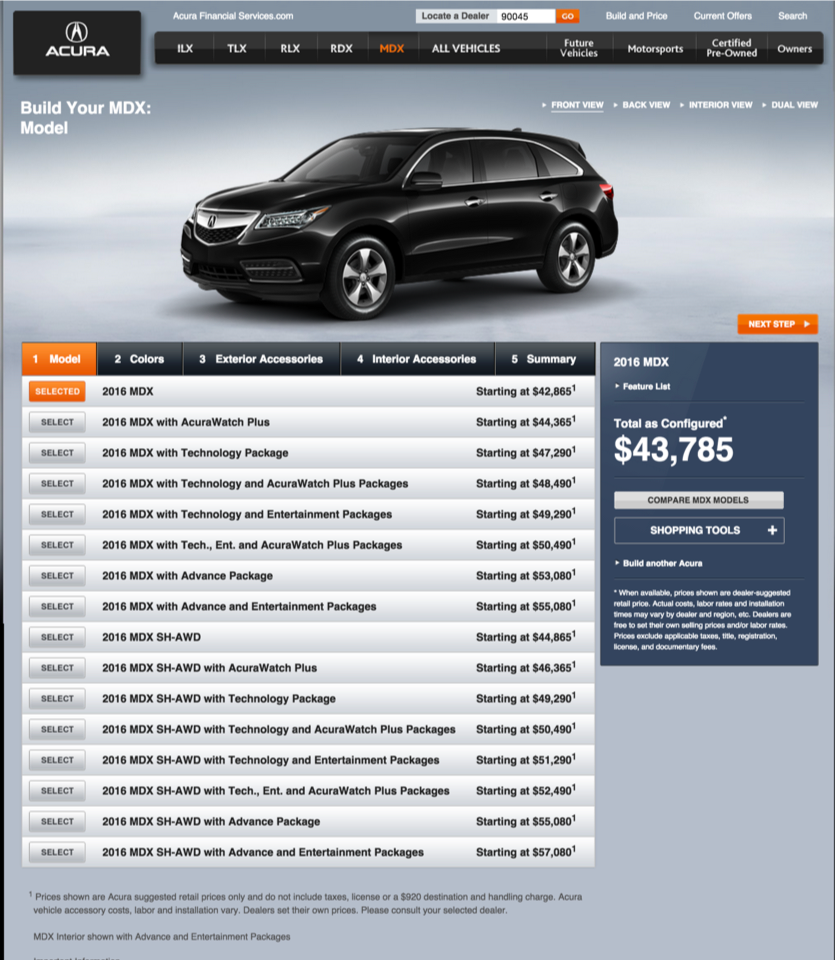
Interaction model exploration
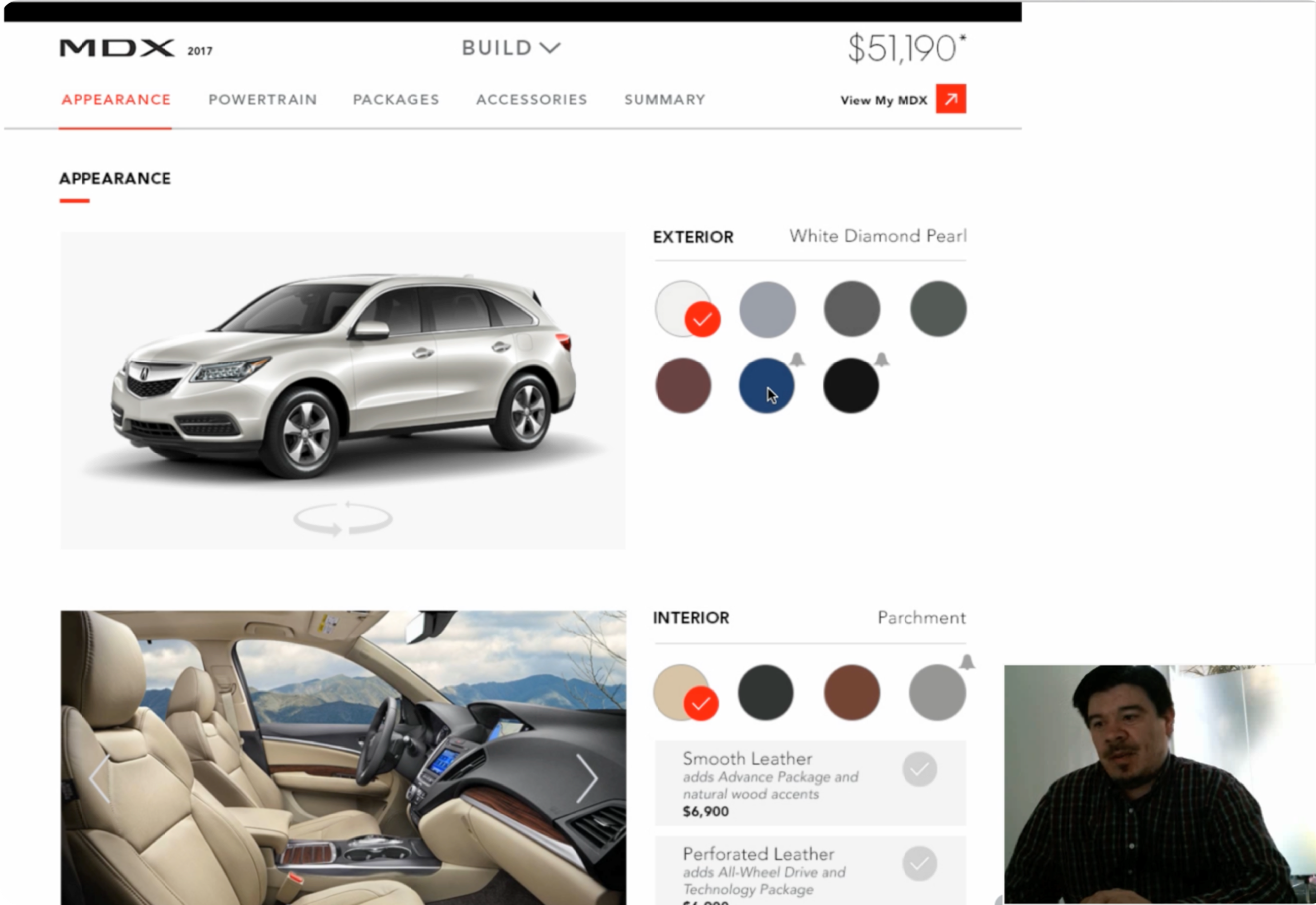
Achieving great results wasn’t magic. It required exploration and prototyping at every stage to validate our ideas. For Acura’s Build and Price tool, I started by creating a new interaction model that made user choices come alive within the interface, with the UI adapting dynamically as customers moved through each step.
Prototyping complex interactions
The further we moved into design, the more detail I added to our prototypes. I created over a dozen iterations, each refining the user experience to address specific challenges. Research showed that mobile interaction would be crucial for customers customizing their dream Acura.
To succeed, I had to simplify the complexities of packages, drivetrains, color combinations, wheels, and more. With customization comes complexity. Incorporating these complex logic chains into user testing gave us greater confidence we were on the right path.
Flexible design purpose
The best investments of design are when they can be leveraged by different audiences for their own purposes. Working with our development teams to update inventory numbers per option, we were able to prove that the Inventory Tool could be useful to both customers and sales staff alike. This seemingly simple addition enabled users to understand the tradeoffs and feel in control rather than disappointed from lack of options.
Testing early saves costly development
My team didn’t just create comps, we built prototypes to ensure our ideas were functional and testable. I started with informal trials using friends, relatives, and coworkers to fine-tune the designs and terminology. Later, we conducted one-on-one interviews with customers using a think-aloud approach while they navigated the Build-and-Price tool. This proved invaluable for identifying jargon they didn’t understand and expectations we hadn’t accounted for.
Contact Me
I’m exploring UX Director and senior product design roles. Let’s talk about what your team is building.